GEM’s work has evolved with these crises—combining emergency assistance, protection, mental health support, case management, research, needs assessment, advocacy, and cross-border response.
While Syrian refugees have remained a major focus of our work, GEM’s support has extended across communities and nationalities, including Lebanese people, Syrian refugees, Palestinian refugees, and LGBTQIA+ people of other nationalities residing in Lebanon, depending on needs, available resources, and project scope.
Community Needs Documented to Shape Our Response
Emergency Responses Activated Across Repeated Crises
Supporting People Displaced Between Lebanon & Syria
GEM’s work in Lebanon has developed through overlapping emergencies rather than a single crisis.
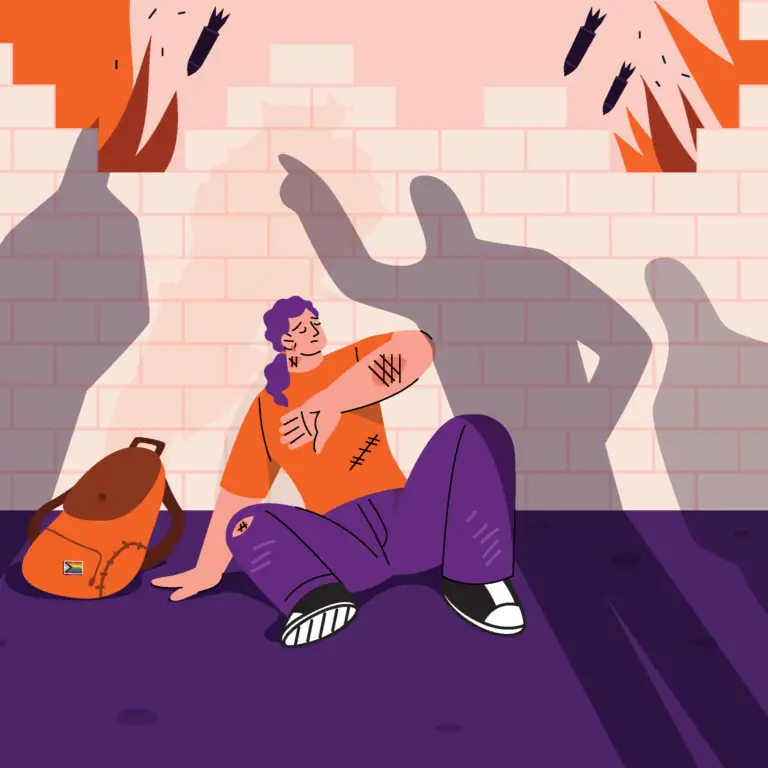
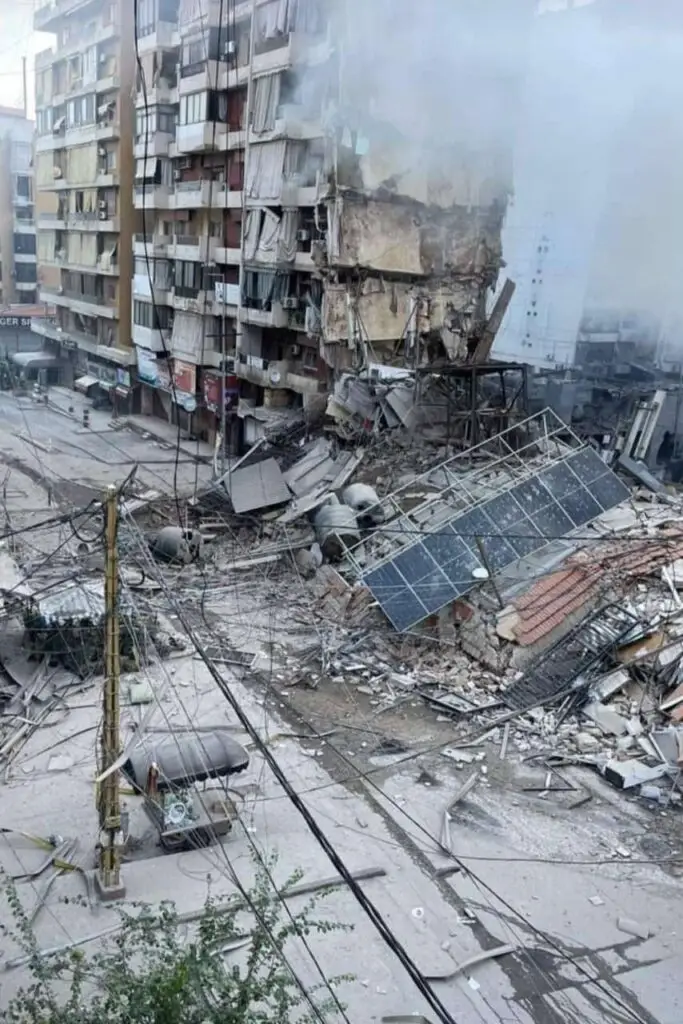
Economic collapse, displacement, housing insecurity, discrimination, anti-LGBTQIA+ violence, and repeated military escalations have created layers of vulnerability—particularly for refugees, transgender and gender-diverse people, and those without strong social or financial safety nets.
During the major 2024 escalation, GEM activated an emergency response within 48 hours, providing urgent cash assistance to displaced LGBTQIA+ people. The response expanded as needs increased to include emergency psychological first aid and other forms of protection and support.
Across different emergencies and projects, GEM has provided or mobilized support based on individual needs and available resources, including:
Emergency Cash Assistance
Protection & Case Management
Psychological First Aid & MHPSS
Emergency Shelter & Housing Support
Food & Essential Needs
Referral & Service Navigation
Documentation of Protection Risks
Cross-Border Support
During the 2024 escalation alone, GEM’s early response provided more than 170 emergency cash assistance interventions, while approximately 400 additional requests were received as displacement intensified.
Across GEM’s broader emergency response in Lebanon, more than 450 people have received support, while 150 urgent cases remain on the waiting list, reflecting needs that continue to exceed available resources.
GEM does not only respond to emergencies. We document what communities experience, assess changing needs, and use evidence to improve our own interventions and advocate for more inclusive humanitarian systems.
GEM conducted needs assessments and produced research documenting the experiences of LGBTQIA+ people during the war and displacement in Lebanon.
Our report, The Multiple Struggles of LGBTQIA+ Individuals Amidst the War in Lebanon, documented displacement, discrimination, violence, homelessness, and barriers to accessing humanitarian assistance.
Among approximately 400 LGBTQIA+ people displaced during the escalation and connected to GEM at the time of the research, nearly 40% reported experiencing harassment, bullying, discrimination, or torture during their displacement journey, with severe physical assaults also documented.
The research also highlighted a wider challenge: humanitarian systems often remain insufficiently inclusive of the specific needs and risks facing LGBTQIA+ people during emergencies, particularly transgender and non-binary people.
Crisis does not affect everyone in the same way.
Nationality, refugee status, gender identity and expression, economic circumstances, documentation, location, and access to community networks can all shape a person’s ability to find safety.
While GEM’s Lebanon work has maintained a significant focus on Syrian LGBTQIA+ refugees, our response has also supported Lebanese LGBTQIA+ people, Palestinian refugees, and people of other nationalities living in Lebanon, according to needs and the scope and resources of individual projects.
Our research captured these intersecting realities, including the experiences of Lebanese people displaced within their own country and transgender Syrian refugees facing overlapping discrimination, housing insecurity, and displacement.
For years, Lebanon has been a destination for Syrians seeking safety from conflict and persecution—including LGBTQIA+ people who could not safely remain in Syria.
Repeated military escalations have reversed that journey for some.
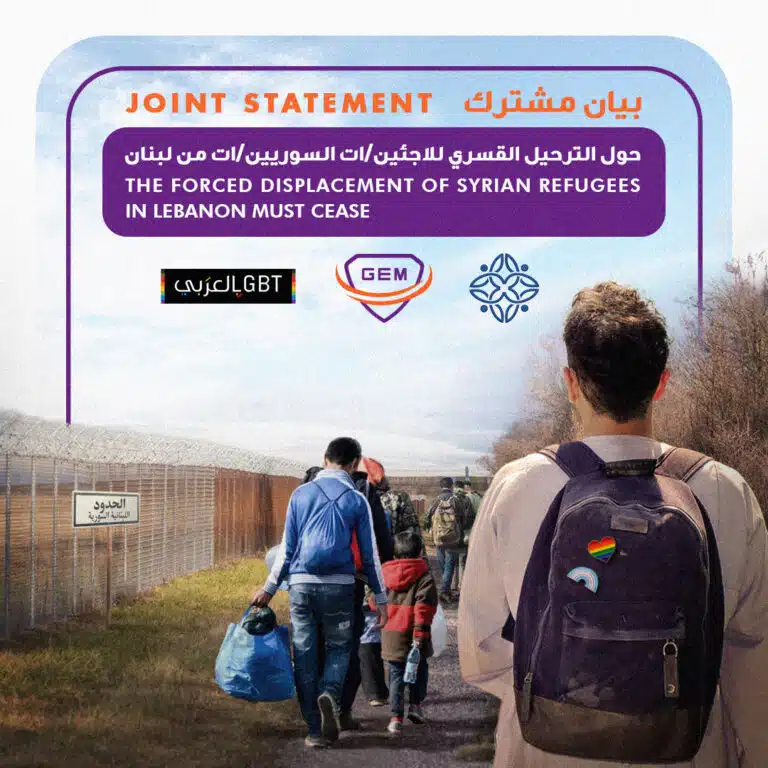
GEM documented LGBTQIA+ Syrians who were forced to leave Lebanon and return to Syria, where displacement could expose them to new protection and security risks. Our research followed individual journeys across the border, including people displaced into northwest Syria after fleeing bombardment in Lebanon.
With renewed escalation in 2026, this cross-border dimension has once again become critical.
GEM has developed a dedicated humanitarian response for LGBTQIA+ individuals and their families displaced from Lebanon to Syria, centered on protection, safe reception, temporary accommodation, mental health and psychosocial support, and essential assistance.
These are planned targets for GEM’s proposed response to the latest displacement from Lebanon to Syria, subject to securing the necessary resources.
The aim is not simply to respond at the border, but to create a protection pathway that can accompany people through displacement and the difficult period that follows.
GEM’s approach seeks to move beyond immediate emergency assistance toward longer-term recovery, resilience, and independence.
Our priorities include:
Protection & Case Management
Mental Health & Psychosocial Support
Safe Housing & Shelter
Livelihoods & Economic Empowerment
Professional Development, AI & Digital Livelihoods
Capacity Building for Inclusive Humanitarian Services
Research, Documentation & Needs Assessment
Community Resilience & Social Support
Advocacy for LGBTQIA+-Inclusive Humanitarian Response
This approach builds on lessons from GEM’s previous Lebanon responses, which identified specialized trauma-focused mental health support, livelihoods, shelter, capacity building, and community support as essential components of recovery.
Lebanon’s crises have changed repeatedly—and GEM’s response has evolved with them.
Our priority is to maintain the capacity to act when new emergencies emerge while investing in longer-term pathways toward safety, mental health, economic independence, resilience, and more inclusive humanitarian systems.
GEM intends to continue working inside Lebanon and across displacement routes between Lebanon and Syria, adapting our interventions as circumstances, community needs, partnerships, and resources change.
Our research has consistently called for stronger inclusion of LGBTQIA+ people in humanitarian response, dedicated resources for those most affected, safer protection pathways, and early recovery approaches designed around the realities communities actually experience.
Your contribution helps GEM provide protection, humanitarian assistance, mental health support, emergency response, and pathways toward longer-term recovery for LGBTQIA+ and marginalized communities.
DONATE TO GEM
Donate securely through GlobalGiving
Eligible donors may receive a tax-deductible donation receipt through GlobalGiving, subject to applicable country and tax regulations.
GEM’s report documenting the experiences of LGBTQIA+ people during war and displacement, including discrimination, violence, humanitarian needs, and barriers to accessing assistance.
Explore GEM’s campaign, emergency response, and work supporting LGBTQIA+ communities affected by the crisis.
Help GEM respond to urgent needs while strengthening longer-term protection and recovery.
Donate to GEM through GlobalGiving