
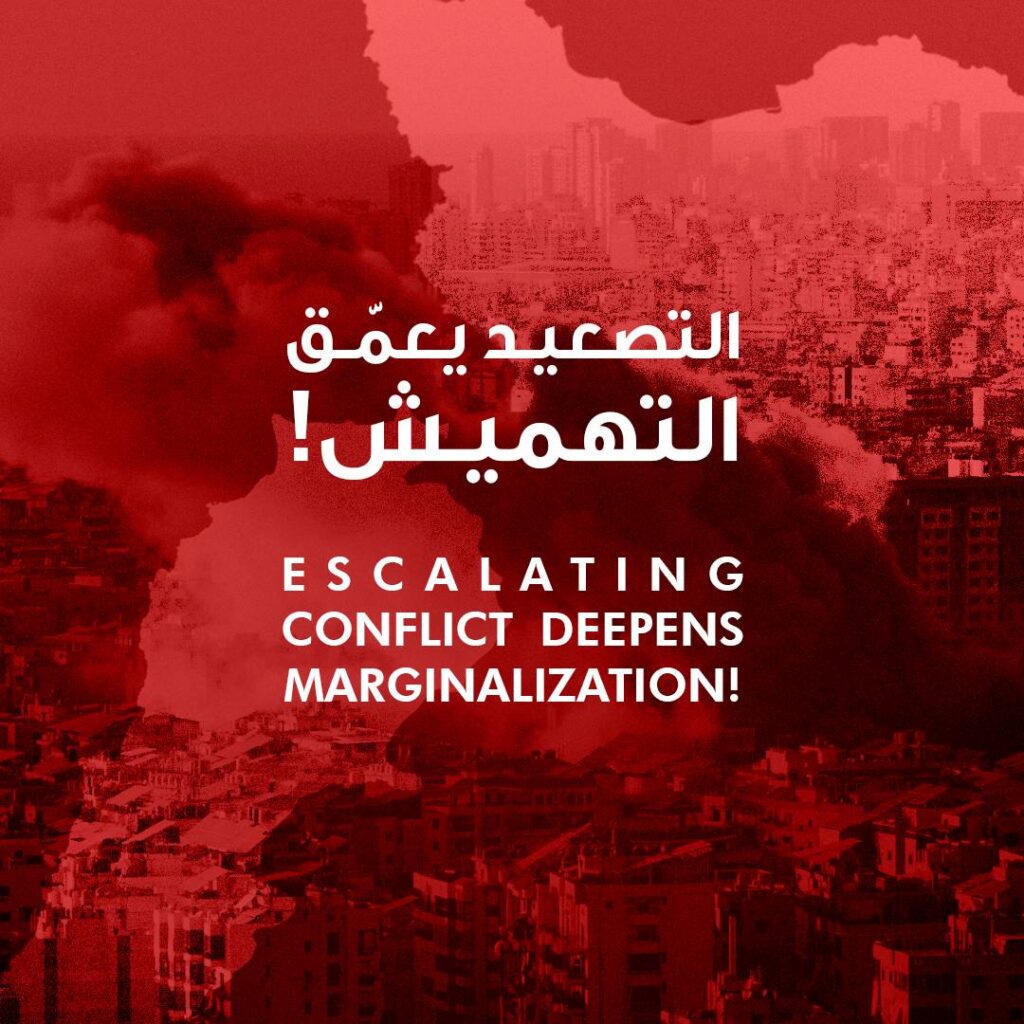
Amidst rapidly escalating events on the ground across the Middle East, the number of displaced people has reached nearly one million in Lebanon alone, according to the UN Refugee Agency (UNHCR), alongside 3.2 million in Iran. This surge in displacement unfolds against a backdrop of “escalating insecurity and severely limited access to basic services,” stated Iaki Ito, UNHCR’s Head of the Emergency Support Team and Emergency Response Coordinator for the Middle East.
In the Lebanese context, Doumit Azzi, Executive Director of Helem, highlighted a glaring gap in the government’s emergency response plan. He noted the total absence of humanitarian intervention strategies tailored to marginalized groups, including LGBTQ+ individuals, survivors of gender-based violence, and migrant workers. Azzi urgently called for specialized training for humanitarian aid workers, the provision of safe and dedicated shelters, the active inclusion of civil society organizations, and the activation of robust monitoring mechanisms to ensure effective implementation.
Navigating the humanitarian response has become increasingly daunting for organizations serving the LGBTQ+ community and other marginalized groups, particularly amid ongoing crises and disasters. A recent report by the Equality Guards Movement, titled “LGBTQ+ Individuals in Lebanon: Targeted for Our Appearance,” shed light on the deteriorating conditions facing these individuals as military escalation intensifies in the region. The report concluded that “there is an urgent need to operationalize a highly sensitive, effective, and tailored response that addresses the unique vulnerabilities of LGBTQ+ individuals” during times of conflict.